
Golf Simulator Room Design Ideas: Make Your Space Amazing

Your golf simulator room should be more than a screen in a garage. With thoughtful design, the right lighting, and a few clever touches, you can create a space that looks incredible, performs brilliantly, and becomes the favourite room in the house. Whether you are converting a garage, fitting out a spare room, dedicating a garden building, or building from scratch, the design decisions you make will determine whether your golf simulator room feels like a premium indoor golf lounge or a makeshift practice bay. This guide covers every aspect of golf simulator room design — from the practical essentials like lighting and sound deadening to the aspirational extras like bar areas, seating, and wall treatments — to help you create a space that impresses everyone who walks in.
We found that proper lighting design makes the single biggest difference to how a simulator room looks and feels.
Planning Your Golf Simulator Room Layout
Before choosing paint colours or shopping for furniture, the layout of your golf simulator room needs careful planning. The hitting zone, projection area, and viewing space must work together without compromise. Get the layout wrong and no amount of decorative work will fix the experience.
The hitting zone sits in the centre of the room, roughly two metres from the impact screen. This is where you stand to take your shots, and it needs the most ceiling height — at least 2.7 metres for comfortable full-swing clearance, ideally 3 metres. The floor in the hitting zone should be level and firm, with your hitting mat positioned centrally so you have equal clearance on both sides for your swing arc.
We have designed over thirty simulator rooms for UK customers and found that lighting and sound management are the two upgrades that most transform the experience from functional to genuinely impressive.
The projection zone is the impact screen and the wall or frame behind it. The screen needs to be flat, tensioned correctly, and positioned at the right height for the projector to fill it evenly. Allow at least 30 centimetres between the edges of the screen and any walls or structures to prevent balls from striking hard surfaces if they miss the screen edge.
The viewing zone is behind and to the sides of the hitting area — where spectators sit, where your PC lives, and where you take a break between shots. In many golf simulator room designs, this area is separated visually from the hitting zone using different flooring, lower lighting, and comfortable seating. This creates a lounge feel that makes the room enjoyable even when you are not actively hitting balls.
For more on the technical aspects of setting up your simulator equipment, read our complete setup guide.
Lighting Design for Your Golf Simulator Room
Lighting is the single most impactful design element in a golf simulator room. Get it right and the space feels professional and atmospheric. Get it wrong and you are squinting at a washed-out screen or swinging in the dark.
The fundamental rule is that the hitting zone and screen area should be dark while the viewing area can have ambient lighting. Any light that falls directly on the impact screen competes with the projector image, reducing contrast and colour vibrancy. The ideal setup uses blackout conditions around the screen with controlled ambient light behind the golfer.
LED strip lighting is the most popular choice for golf simulator room ambiance. Run strips along the base of walls, under shelving, behind the TV or scoreboard, and along the ceiling perimeter of the viewing zone. Choose RGBW strips that let you adjust colour and brightness — warm white for a relaxed lounge atmosphere, cool blue or green for a modern golf club feel, or match your favourite team colours for added personality.
Recessed ceiling spotlights with dimmer controls work well in the viewing zone. Position them behind the hitting position and angle them away from the screen. Dimmable spots let you brighten the room between sessions for socialising and dim them when it is time to hit. Avoid any downlights directly above the hitting zone as they create glare on the screen and shadows on the mat that interfere with ball visibility.
A dedicated light above the hitting mat improves ball visibility without affecting the screen. A narrow-beam pendant or track light positioned directly overhead, angled slightly toward the golfer, illuminates the ball and mat surface without spilling light forward onto the screen. This is a detail that separates a good golf simulator room from a great one.
Wall Treatments and Sound Deadening
The walls of your golf simulator room serve three functions: aesthetic appeal, sound absorption, and ball protection. The right wall treatment addresses all three simultaneously.

GolfBays SimBox Golf Simulator Enclosure
£1,161
The most popular enclosure for dedicated simulator rooms.
View ProductSound is a significant consideration, especially in attached garages or rooms that share walls with living spaces. The impact of a golf ball on a screen or net generates a sharp sound that can travel through walls and disturb other rooms. Acoustic foam panels applied to the side walls and ceiling of the hitting zone absorb this sound energy effectively. Panels of 50mm thickness in a wedge or pyramid profile provide excellent absorption across the frequency range of ball impact sounds. They are available in various colours and can be arranged in patterns that contribute to the room's visual design rather than detracting from it.
For a more premium look, fabric-wrapped acoustic panels combine sound absorption with a clean, modern aesthetic. These panels are available in dozens of fabric colours and can be custom-sized to fit your wall dimensions precisely. They mount flush to the wall and create a professional studio appearance that elevates the entire golf simulator room design.
Side walls near the hitting zone need ball protection even with a well-contained setup. Occasional mishits may strike the side walls before the netting catches them, especially if you are experimenting with extreme shot shapes. Padded wall panels, thick rubber matting, or even turf wall coverings protect the drywall from damage while adding visual interest. Artificial turf mounted vertically on the walls surrounding the hitting zone creates a distinctive look that reinforces the golfing theme of the space.
For detailed guidance on managing sound in your setup, read our noise and neighbours guide.
Flooring Ideas for a Golf Simulator Room
Flooring in a golf simulator room needs to handle three distinct zones: the hitting area, the walkway, and the viewing or lounge area. Each zone has different requirements, and using different flooring materials across these zones is both practical and visually effective.
The hitting area requires a firm, level surface that supports the hitting mat without any give or bounce. Concrete garage floors work perfectly as-is. If you are building on a timber floor, ensure the subfloor is rigid enough to prevent any flex under the impact of hitting down into the mat. Rubber gym tiles in 20mm thickness provide excellent shock absorption, protect the subfloor, and create a defined hitting zone visually. They are available in black, grey, and various colours that coordinate with your overall design scheme.
The walkway between the viewing area and the hitting zone benefits from a durable, easy-clean surface. Luxury vinyl plank flooring in a dark wood or stone effect is popular in golf simulator rooms because it is waterproof, scratch-resistant, and gives a premium look at a fraction of the cost of real wood or stone. It also provides a clear visual transition between the lounge area and the functional hitting space.
The viewing and lounge area can use carpet, rugs, or the same vinyl plank flooring for a cohesive look. A thick rug under the seating area adds warmth and comfort while defining the social space. Dark colours in the flooring throughout the golf simulator room help with light control, as lighter floors reflect ambient light upward and can create unwanted glow on the screen.
The Impact Screen and Enclosure: Form Meets Function
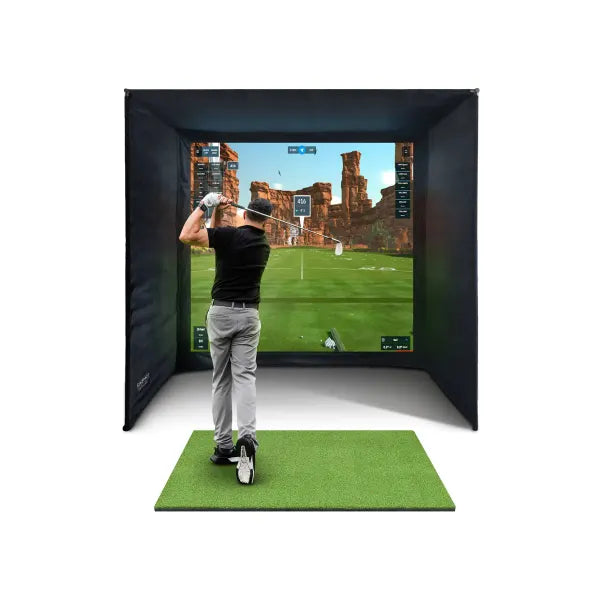
The impact screen is the visual centrepiece of your golf simulator room, and the enclosure around it frames the experience. How you mount and present these elements affects both the look and the functionality of the space.
A ceiling-mounted retractable screen gives you the option to hide the simulator when the room serves other purposes. When deployed, the screen drops from a ceiling-mounted housing to fill the wall. When retracted, the room can function as a normal garage, workshop, or entertainment space. This is particularly valuable in multi-use spaces where the golf simulator room shares duties with other activities.
For dedicated simulator rooms, a permanently mounted screen with a custom frame creates a polished, built-in look. Wrap the frame in fabric that coordinates with your wall treatment, or finish it with trim moulding that matches the room's architectural style. The frame should mask the edges of the screen neatly and hide the mounting hardware from view.
The enclosure or netting around the screen catches balls that miss the screen surface. In a well-designed golf simulator room, this netting is either hidden behind side panels or selected in a colour that blends with the room's palette. Black netting against dark walls becomes virtually invisible, maintaining the clean aesthetic of the space. Browse our golf simulator range for complete packages that include screens and enclosures designed to work together.
Seating and Bar Areas: The Social Golf Simulator Room
The best golf simulator rooms are not just practice spaces — they are entertainment destinations. Adding comfortable seating and a bar area transforms your golf simulator room from a solo practice bay into a social hub where friends gather for evening competitions, weekend tournaments, and casual rounds over drinks.
Seating should be positioned behind the hitting zone with a clear view of the screen. Bar-height stools work well because they put viewers at a comfortable eye level for the projected image and create a casual, social atmosphere. A built-in bench seat along the back wall with cushions provides more seating capacity for larger groups. Ensure all seating is far enough behind the hitting zone that no one is within range of a backswing or a mis-hit ball bouncing back from the screen.
A bar area against the side or back wall of the golf simulator room adds hospitality that elevates the experience. A simple countertop with a bar fridge, glass shelving, and a few bottles creates a functional drinks station. More ambitious builds incorporate a full bar with tap handles, a sink, and overhead glassware storage. The bar becomes the social anchor of the room, giving the space a premium feel that rivals commercial indoor golf venues.
A wall-mounted TV or monitor separate from the main projector screen is useful for displaying live leaderboards, showing sports channels during social events, or running the simulator software on a secondary display for detailed shot analysis. Mount it in the viewing area where it is visible from the seating but does not interfere with the main projected image.
Technology Integration and Cable Management
Clean technology integration separates amateur setups from professional-looking golf simulator room designs. Every cable, box, and device in the room should be either hidden or neatly routed so the technology serves the experience without cluttering the visual space.
Route all cables through conduit or cable channels mounted along walls and ceiling edges. Paint the conduit to match the wall colour so it disappears visually. The main cable runs are HDMI from the PC to the projector, power cables to the projector and PC, and audio cables if you are using external speakers. Plan these routes before decorating the room so you can install conduit before applying final wall treatments.
The PC should be positioned in a ventilated cabinet or shelf unit in the viewing area, close to power outlets and within HDMI cable reach of the projector. Avoid placing the PC in the hitting zone where ball impacts could damage it or where fan noise is distracting during your swing. A small ventilated cupboard with mesh panels keeps the PC dust-free and out of sight.
Smart home integration adds convenience. Voice-activated lighting lets you switch between hitting mode and lounge mode without walking to a switch. A smart plug on the projector lets you power it on from your phone. Smart speakers provide music during practice and can be integrated with the simulator software for shot callout announcements. These touches are inexpensive but make the golf simulator room feel genuinely high-tech.
Design Ideas by Budget
Not every golf simulator room needs a five-figure design budget. Here are three tiers of design that deliver results at different price points.
Budget design (under five hundred pounds): Paint the walls dark grey or navy blue to improve screen contrast and create atmosphere. Add LED strip lighting behind the screen and along the base of the walls. Use rubber gym tiles in the hitting zone and a large dark rug in the viewing area. Mount the screen and enclosure neatly using the supplied hardware. This simple treatment transforms a bare garage into a functional and attractive golf simulator room for minimal cost.
Mid-range design (five hundred to two thousand pounds): Add acoustic panels to the side walls and ceiling of the hitting zone. Install luxury vinyl plank flooring throughout. Add bar-height seating behind the hitting area and a simple countertop bar with a fridge. Upgrade to a custom screen frame with trim moulding. Add a wall-mounted TV for leaderboards. Install dimmer-controlled recessed spotlights and RGBW LED strips. This level of finish creates a space that genuinely impresses visitors.
Premium design (two thousand pounds plus): Commission fabric-wrapped acoustic panels in custom colours. Install a full bar with sink, taps, and glass shelving. Add a retractable screen system. Use turf wall accents in the hitting zone. Install smart lighting and audio. Add climate control for year-round comfort. Commission custom cabinetry for equipment storage. This level produces a golf simulator room that rivals the best commercial venues and adds genuine value to your home.
Whatever your budget, the key is to plan thoughtfully and prioritise the elements that have the biggest visual and functional impact. Dark walls, good lighting, and a clean screen installation cost very little but transform the feel of the space entirely. Start there and add premium elements over time as budget allows.
For the equipment side of your build, browse our simulator bundles for complete packages, our hitting mats for the perfect striking surface, and our launch monitors for the technology that powers the experience. The FlightScope Mevo Gen 2 bundle and the Foresight GC3S bundle are both excellent choices that come with everything you need to fill your new room. Read our buyer's guide for comprehensive equipment advice, and our room design ideas article for even more inspiration.
For room acoustics guidance, the Institute of Acoustics provides resources on sound management in enclosed spaces.
Ready to Build Your Home Golf Simulator?
Our SimSpace enclosures are used by hundreds of UK golfers. Get a premium enclosure with a 4K impact screen, velour interior panels, and rock-solid steel frame.
Not sure which size? Book a free consultation and we'll help you plan the perfect setup for your space.
Recommended Products


Will a Simulator Fit Your Space?
Use our free sim space planning tool to check your room dimensions, ceiling height, and find the right enclosure size. Takes 2 minutes and we'll send you a personalised recommendation.
Check Your Space →Frequently Asked Questions
What is the best colour to paint a golf simulator room?
Dark colours work best. Dark grey, charcoal, navy blue, or black walls minimise light reflection and maximise projector image contrast. The area immediately surrounding the impact screen should be the darkest, as any reflected light in this zone directly competes with the projected image. Lighter colours can be used in the viewing area behind the golfer where screen contrast is less affected.
How do I soundproof a golf simulator room?
Complete soundproofing requires mass — thick walls, dense insulation, and sealed gaps. For most home setups, sound reduction rather than full soundproofing is the practical goal. Acoustic foam or fabric panels on the walls and ceiling of the hitting zone absorb the sharp impact sound, reducing transmission to adjacent rooms by a noticeable amount. Sealing gaps around doors and installing a solid-core door further reduces sound escape.
Can I build a golf simulator room in a spare bedroom?
Yes, provided the ceiling height is adequate for your swing. Standard UK bedroom ceilings at 2.4 metres are borderline — shorter golfers may manage with irons but taller golfers will need more height. The room needs to be long enough for adequate projection distance (at least 4 metres) and wide enough for a full swing (at least 3 metres). Reinforce the ceiling if the room is below a bedroom, as ball impacts on the screen generate vibrations that can transmit through the floor above.
How much does it cost to design a golf simulator room?
The room design and finishing costs range from under five hundred pounds for a basic dark-wall-and-LED treatment to several thousand for a full premium fit-out with acoustic panels, custom flooring, bar area, and smart technology. This is separate from the simulator equipment cost. Most golfers find that a mid-range investment of around one thousand pounds in room design dramatically improves the overall experience and makes the space far more enjoyable to use and show off.
What flooring is best for a golf simulator room?
Rubber gym tiles in the hitting zone provide shock absorption and protect the subfloor. Luxury vinyl plank in walkways and viewing areas provides a premium look with excellent durability. Carpet or rugs add comfort in seating areas. Using different materials to define the zones is both practical and visually effective. Avoid polished or glossy flooring anywhere in the room as it reflects light and creates glare on the screen.


Leave a comment