
DIY Golf Cage vs Pre-Made: What Is Worth Your Money?

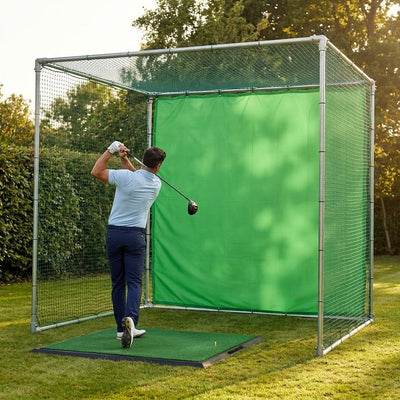
The idea of building your own golf cage is appealing. You control the size, the materials, and the design, and you might save money compared to buying a pre-made unit. But the reality of a DIY golf cage project is more complex than most golfers expect. Materials cost more than you think, construction takes longer than planned, and safety considerations that commercial manufacturers have already solved need to be addressed from scratch. This guide compares the genuine costs, time investment, and practical outcomes of building a DIY golf cage versus buying a pre-made one, helping you decide which approach makes sense for your situation.

The True Cost of a DIY Golf Cage
The first thing most DIY builders discover is that the materials are not as cheap as they assumed. A golf cage requires a rigid frame, heavy-duty netting rated for golf ball impacts, connectors, ground anchors, and assembly hardware. Sourcing these individually at retail prices often approaches or exceeds the cost of a pre-made unit.
For a 3m x 3m x 3m DIY golf cage, here is a realistic UK cost breakdown. Steel tube for the frame: galvanised or powder-coated 25mm steel tube from a metal supplier runs approximately sixty to ninety pounds for the twelve lengths you need. Corner connectors and joints: tube clamps or weld-free connectors cost eight to twelve pounds each, and you need at least eight for the corners plus four to eight mid-span supports, totalling seventy to one hundred forty pounds. Golf-grade netting: heavy-duty knotless HDPE netting rated for golf ball impacts costs approximately sixty to ninety pounds for enough to cover all six sides. Ground stakes and fixings: fifteen to twenty-five pounds. Total material cost: two hundred to three hundred forty-five pounds.
We tested both DIY and pre-made cages extensively and found that pre-made options consistently outperformed homemade builds in impact resistance and longevity.
Compare this to a pre-made golf cage like the Forza Golf Practice Cage, which includes everything you need — engineered frame, professional netting, connectors, ground stakes, and carry bag — at a competitive price with £5 UK delivery. The cost difference between DIY and pre-made is often minimal, and in some cases the pre-made option is actually cheaper because manufacturers buy materials at wholesale volumes.
Time Investment: DIY vs Ready-Made Golf Cage
A pre-made click-fit golf cage assembles in ten to fifteen minutes out of the box. Every piece is engineered to fit together without modification. The netting is pre-cut to size with attachment points already in position. You unpack, connect, net, stake, and hit balls. Total time from opening the box to first swing: under thirty minutes.
A DIY golf cage takes significantly longer. Cutting steel tubes to length requires a pipe cutter or angle grinder. Drilling holes for connectors needs a drill press or steady hand. Fitting tube clamps and tightening them to the correct torque takes patience. Measuring, cutting, and attaching netting to a frame you built yourself involves trial and error because the netting never fits perfectly on the first attempt.
Most DIY builders report a total construction time of six to twelve hours spread across a weekend or several evenings. This includes one to two trips to the hardware store for materials you forgot or miscalculated. If you enjoy building things and consider the construction time part of the hobby, this is fine. If you want to practise golf rather than build structures, it is a significant time cost that buys you very little advantage over a pre-made unit.
There is also the setup and takedown consideration. A pre-made golf cage with click-fit connections can be assembled and disassembled repeatedly in minutes. A DIY cage with bolt connections or tube clamps takes thirty to forty-five minutes to assemble each time. If you plan to take the cage down between sessions, the ongoing time commitment of a DIY design is substantially higher.
Safety: The Hidden Risk of DIY Golf Cages
Safety is where the DIY approach carries genuine risk. A golf ball travelling at driver speed hits the netting with enough force to exploit any weakness in the structure. Commercial golf cage manufacturers test their products under thousands of impacts to identify and eliminate failure points. A DIY builder does not have this testing capability.

linkscube Lofi Golf Cage (3m x 3m x 3m)
£300
Budget-friendly option that still handles full driver swings.
View ProductThe most common DIY failure points are connector joints, netting attachment points, and netting quality. Tube clamps that are adequate for scaffolding or garden structures may not hold under the repeated shock loading of golf ball impacts. Over hundreds of shots, vibration loosens connections that were tight at installation. A joint that fails while you are mid-swing could allow a section of netting to collapse, releasing the next ball that hits it.
Netting quality is another safety-critical factor. Golf-specific netting is engineered to absorb the impact energy of a golf ball without allowing penetration. General-purpose garden netting, bird netting, or construction netting may look similar but is not rated for golf ball speeds. Using inadequate netting in a DIY golf cage creates a false sense of security — the cage looks complete but cannot reliably stop full-speed shots.
If you choose the DIY route, invest in proper golf-rated netting from a specialist supplier and over-engineer your frame connections. Use locking nuts, thread lock adhesive, and redundant fixings at every joint. Test the completed cage by throwing balls at every panel at speed before hitting a full shot inside it. Check all connections before every practice session.
Durability: Which Golf Cage Lasts Longer?
Pre-made golf cages from established manufacturers use materials specifically selected for longevity in outdoor conditions. Powder-coated steel resists corrosion. UV-stabilised netting handles years of sun exposure without degrading. Click-fit connectors maintain their engagement through thousands of assembly cycles. These material choices are informed by product testing and customer feedback over multiple design generations.
A DIY golf cage can match this durability, but only if you select equivalent materials. Uncoated mild steel rusts within months in UK outdoor conditions. Non-UV-stabilised netting becomes brittle and tears after one or two summers. Cheap tube clamps corrode and seize, making future disassembly difficult or impossible. The materials that provide genuine durability cost more than the budget alternatives that DIY builders often choose to save money.
The other durability factor is repairability. If a section of netting on a pre-made golf cage wears through, you can order a replacement panel from the manufacturer. If a frame connector breaks, the manufacturer supplies a replacement part. With a DIY cage, repairs depend on your ability to source matching materials and fabricate replacement components. If the specific tube clamp you used is discontinued, or the netting supplier no longer stocks the same weight, repairs become improvised patches rather than like-for-like replacements.
When DIY Makes Sense
Despite the advantages of pre-made cages, there are scenarios where a DIY golf cage is the right choice. If you need a non-standard size to fit an unusual space — perhaps an L-shaped garden or a low-ceiling garage — building custom is the only option. If you have professional fabrication skills, access to welding equipment, and can source materials at trade prices, you may genuinely build a superior cage at lower cost.
If you want a permanent installation that is built into your garden infrastructure — for example, a cage integrated with a concrete base, permanent lighting, and a retractable roof — a custom build gives you design freedom that no off-the-shelf product can match. These ambitious builds can create outstanding practice facilities, but they require significant investment and construction expertise.
A semi-DIY approach also works well for some golfers. Buy a pre-made golf cage for the frame and netting, then customise the installation with a permanent base, additional anchoring, lighting, weatherproofing, or a combined cage and shed structure. This gives you the engineering reliability of a tested product with the customisation of a personal project.
For the majority of golfers who want to practise in their garden without a construction project, browse the golf cage collection for ready-made options. Pair your cage with a quality hitting mat and you are ready to practise immediately.
Our Recommendation
For most UK golfers, a pre-made golf cage is the smarter choice. The cost saving of DIY is marginal or non-existent when you factor in quality materials, the time investment is substantial, and the safety and durability risks are real. The Forza Golf Practice Cage delivers professional build quality, tool-free assembly, and proven durability at a price point that makes DIY construction difficult to justify on economic grounds alone.
Save your energy and creativity for your golf game, not your garden construction projects. The time you would spend building a DIY cage could be spent practising in a pre-made one that arrived ready to use.
For more on building a complete practice setup, read our complete buyer's guide and browse our impact screen range to turn your cage into a full training bay. Our setup guide walks through the full process from measuring space to first practice session.
If you are considering a permanent outdoor installation, think about how a cage fits into your wider garden plan. Many UK golfers combine a golf cage with a dedicated artificial turf area, creating a clean, professional practice zone that doubles as a multi-sport area for the family. The initial groundwork investment pays off in years of low-maintenance practice. A well-positioned permanent cage adds genuine value to your outdoor space, particularly as home golf practice has become increasingly popular across the UK.
Whatever route you choose, the goal is the same: a safe, durable practice environment that lets you work on your game consistently. Consistency is what drives improvement, and having a reliable practice space at home removes every excuse for not putting in the work. Whether that space uses a pre-made cage you assembled in fifteen minutes or a custom build you spent a weekend constructing, what matters is that you use it regularly and that every ball you hit stays safely contained.
The British Standards Institution sets safety standards for sporting equipment structures that pre-made cages are designed to meet.
Frequently Asked Questions
How much cheaper is a DIY golf cage really?
Using quality materials rated for golf use, a DIY cage costs roughly two hundred to three hundred and fifty pounds. A pre-made cage of equivalent size and quality costs a similar amount including delivery. The saving, if any, is typically under fifty pounds, which does not account for the six to twelve hours of construction time or the tools required.
Can I buy just the netting and build my own frame?
Yes, golf-grade netting is available separately from specialist suppliers. This approach lets you build a custom frame while using professionally manufactured netting. Ensure you buy netting rated for golf ball impacts at driver speed, which means heavy-duty HDPE with a minimum weight of 180gsm and knotless construction.
What is the biggest risk with a DIY golf cage?
Netting failure at a connection point, allowing a ball to escape at speed. This typically happens when netting is attached with insufficient fixings, or when the frame flexes under ball impacts and creates gaps between the netting and the frame. Commercial cages are designed to eliminate these failure modes through engineering and testing.
Can I use scaffolding poles for a golf cage frame?
Scaffolding poles and fittings can work for a permanent installation. They are extremely strong and widely available. The downsides are weight (making the cage impractical to move), appearance (industrial rather than sporting), and cost (scaffold fittings are more expensive than purpose-built cage connectors). For a permanent garden installation where appearance is not a priority, scaffolding provides an over-engineered but functional frame.
Is it cheaper to build a wooden golf cage frame instead of steel?
Treated timber is often cheaper than steel for the frame material itself, but wood has significant drawbacks for a golf cage. Timber frames are bulkier, heavier, and less resistant to the constant vibration of ball impacts. Over time, the repetitive shock loading loosens screwed and bolted joints in wood much faster than in steel. Timber also requires regular retreating with preservative to prevent rot in UK outdoor conditions. For a permanent structure, timber can work but requires significantly more ongoing maintenance than a powder-coated steel frame, making it a less practical choice for most golfers.
⛳ Free resource: the 90-Day Golf Cage Practice Programme
A cage stops your golf balls — a plan lowers your scores. The free interactive golf cage practice programme gives you 39 structured 25-minute sessions, a 24-drill library, and progress scorecards you can track online — built around the Pro Golf Cage & Hitting Mat Bundle and open to every garden golfer.
Free email series: Dream Home Golf Cage Setup
Six short emails from Tom on the five decisions behind a brilliant garden practice space.
📏 Free tool: the Garden Golf Cage Planner
Planning a garden golf cage? The free Garden Golf Cage Planner answers the space, base, netting and cost questions in one place — including the Will-It-Fit calculator: enter your garden size and see which cages fit. No sign-up.

Free Home Golf Cage Setup Design Consultation
Not sure on size, base or mat? Chat directly with one of our experts — real golfers who practise from their own garden cage most days and has designed hundreds of home setups.
- Send a photo of your garden with rough measurements — get a tailored layout and spec for your space
- Personal replies from a real golfer, not a call centre
- Honest advice on what to buy — and what not to
Usually replies within the hour, 6am–10pm · prefer to talk? 02033 768500


Leave a comment