
Commercial & Professional Golf Cages UK: Clubs, Schools and Ranges

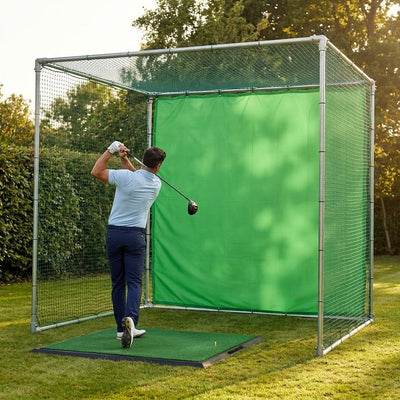
Golf clubs, schools, driving ranges and coaching studios buy practice cages with a different checklist from garden buyers: duty cycle, member safety, sightlines, and whether the thing still looks professional after ten thousand balls a month. Having supplied both, this is the honest guide to speccing a commercial golf cage in the UK — and where the money should and should not go.
OUR #1 GARDEN CAGE, READY TO PLAY
The Pro Golf Cage & Hitting Mat Bundle pairs a galvanised 42mm steel cage with a driver-rated double net and a tour-density mat — a buy-once, all-weather practice station for the UK garden. Best seller, includes the free 90-day practice programme.
View the Professional Golf Cage Bundle →The commercial spec, in one paragraph
42mm galvanised steel is the minimum tube gauge for continuous use — lighter 25–34mm frames work in gardens but fatigue under club-and-school duty. The impact panel does the real work: specify archery-grade baffle netting, rated for full-speed driver strikes and lasting 2–3× longer than standard twine, hung with an air gap behind it. Outer netting should be UV-treated knotless twine. For fixed installations choose socketed anchoring — four concreted ground sockets — over pegs; it is rock solid and the frame lifts out for maintenance.
One bay or two?
Two-bay cages transform throughput for clubs and schools — two players hitting simultaneously with full containment between stations, sharing one frame side, which is why the 2-bay golf cage configuration costs materially less than two singles. For coaching studios, one bay plus a launch monitor is usually the better spend: the data sells lessons.
What it costs (and the trade-account question)
A professional single-bay cage with mat and base lands around £1,300; a 2-bay around £2,500. Compare that with netting a whole range boundary or one insurance claim from an uncontained mishit and the maths is short. For clubs, schools and multi-site buyers we quote directly — volume pricing, invoicing, and site-specific advice on sockets versus pegs. The fastest route is WhatsApp or the phone: 02033 768500.
Safety and siting for member environments
Full containment (roof and sides) rather than open nets; entry from the side away from the hitting line; signage on the entry side; and if the cage is near paths, the archery-grade panel is non-negotiable. Anchoring detail — wind loads, ground types — is covered in How to Anchor a Golf Cage.
Not sure what fits your garden?
Send me a photo of your garden with rough measurements on WhatsApp and I’ll design your setup with you — free, no obligation. Chat with Tom on WhatsApp →
Two common commercial set-ups
A school PE set-up is typically a 2-bay cage beside the sports hall: the deciding factors are side-entry doors away from the hitting line and the archery-grade panel, because duty of care documentation is usually the bursar’s first question, not price. A coaching studio often takes the opposite route: one bay plus a FlightScope Mevo, because its revenue is lessons and the data display sells rebookings. For institutions I recommend concreted sockets every time — pegs are for gardens and reversibility.
The procurement checklist
For a facilities or bursar file, the specification that matters: galvanised steel frame at 42mm tube gauge; archery-grade baffle panel (the consumable — ask any supplier for its strike rating and replacement cost, because that is the true running cost); UV-treated knotless outer netting; socketed anchoring with a documented wind rating; side entry positioned off the hitting line; and replacement-parts availability in the UK — lead time on a replacement panel is the difference between a weekend and a term out of service. England Golf’s facilities resources are useful context for clubs building a wider practice-area business case.
Why ranges are re-speccing bays
The range trend we see is conversion of open bays into contained cages with launch monitors — data practice commands a premium per hour and contained bays cut ball-scatter liability. A cage plus a mid-range monitor is a fraction of a full simulator build-out, and it is weatherproof. If that is the direction, buy the cage spec above and the monitor separately; bundled “range systems” price the same hardware at hospitality margins.
Frequently asked questions
What golf cage do driving ranges use?
Heavy-duty steel frames (42mm+), archery-grade impact baffles and UV-treated outer nets, usually socketed into concrete. The same spec sold for premium garden use handles club duty.
Can schools use garden golf cages?
Yes — the spec that matters is containment and the impact panel, not the setting. Two-bay configurations double throughput for group sessions.
Do you offer trade pricing for golf cages?
Yes — clubs, schools, ranges and multi-site buyers are quoted directly with volume pricing and invoicing. Contact us on WhatsApp or 02033 768500.
How long does a commercial golf cage last?
Galvanised frames last a decade-plus outdoors. Impact panels are the consumable: archery-grade baffles take roughly 2–3× the strikes of standard netting before replacement.
What is the difference between a garden and commercial golf cage?
Mostly duty cycle and anchoring. The steel gauge (42mm), archery-grade panel and UV-treated netting are the same spec we sell for premium garden use; institutions add concreted socket anchoring, side-entry discipline and documented maintenance.
Can a golf cage be installed on artificial turf or tarmac?
Yes — socketed installation suits hard standing (core-drill and concrete the sockets), while turf-over-sub-base takes either system. We advise on ground types as part of the quote.
How many players can use a 2-bay golf cage at once?
Two, hitting simultaneously with full containment between stations. For schools running groups, a 2-bay plus a rotation drill comfortably keeps six to eight pupils active per session.
What maintenance does a commercial cage need?
A quarterly walk-round: check net tension and clips, clear debris off the roof net, inspect the impact panel for wear zones, and rotate the panel annually to spread strike wear. Budget a replacement panel every one to two years under heavy use.
Lead times and installation support
Cage frames and panels ship from UK stock, typically inside a week; socketed installations need the concrete cured before the frame goes in, so plan a fortnight end to end. We supply socket-setting drawings with every commercial order, and for multi-bay projects we will talk your grounds team or contractor through the install on a call — most facilities teams handle it comfortably in a day once the sockets are set. We supply rather than fit; if you would rather not handle the build in-house, we recommend booking assembly help through Airtasker.
Funding routes schools use
Worth knowing before the budget meeting: schools often fund a cage through sport-premium allocations or PTA match-funding rather than the capital budget, because a practice cage counts as curriculum PE equipment rather than a building project — no planning, no contractors, one invoice. Clubs typically route it through the range or academy P&L, where a single cage adding one coached hour a day pays its way inside a season. If a finance committee needs a one-page case, ask us and we will help you put one together.
Ready to build your garden practice space?
Configure the cage, mat and base in 60 seconds — from £734.99 with a £50 bundle saving and the free 90-day practice programme included.
Configure a Professional Golf Cage →
Free Home Golf Cage Setup Design Consultation
Not sure on size, base or mat? Chat directly with one of our experts — real golfers who practise from their own garden cage most days and has designed hundreds of home setups.
- Send a photo of your garden with rough measurements — get a tailored layout and spec for your space
- Personal replies from a real golfer, not a call centre
- Honest advice on what to buy — and what not to
Usually replies within the hour, 6am–10pm · prefer to talk? 02033 768500


Leave a comment