
Best Golf Simulator Enclosures UK 2026: SimSpace vs GolfBays vs Vanish

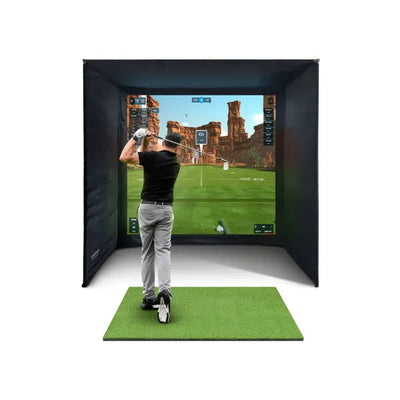
The enclosure is the least glamorous purchase in a home simulator and the one you will physically stand inside for hundreds of hours, so it deserves more thought than it usually gets. In 2026 the UK market has settled into four ranges that between them cover almost every room, budget and ambition: the GolfBays EasySim at £999, the GolfBays SimBox from £1,161, the SimSpace family from £1,299.01 (with its UltraMAX grey-screen tier from £1,499.99), and the retractable Vanish 16H at £3,455. I sell and install all four, which means I also take the WhatsApp messages when someone buys the wrong one for their room. This is the comparison I wish every buyer read first: what each range actually is, where it wins, where it disappoints, and how to match one to your space rather than to a marketing photo.

What actually separates one golf simulator enclosure from another
Strip away the branding and an enclosure is four decisions wearing a fabric cover.
The screen. This is where cheap enclosures cheat. The impact screen takes the full energy of your driver, hundreds of times a session, and doubles as your projection surface. Heavier tensioned material lasts longer, sounds quieter at impact and shows a sharper picture. A high-contrast grey screen holds black levels in rooms you cannot fully darken; a white screen needs a dark room or a bright projector to look its best.
Depth: bay or cage. Most enclosures in this price bracket are around 1.5m deep: they wrap the screen and catch the shots that miss it, while you hit from out in the room. Walk-in cages at 3m deep surround far more of the ball flight, which matters more the wilder your misses are. Be honest with yourself about your shanks before deciding this one.
Footprint versus your room. Width and height are hard limits. A 3m-wide screen in a 3.1m-wide garage leaves no walkway; a 2.5m-tall frame under a 2.4m ceiling is a return label. Measure the room first, then shop. Our simulator room size guide covers the full arithmetic, including the bit everyone forgets: swing space behind the ball, plus roughly 2.4m behind the ball again if you run a radar launch monitor such as a FlightScope Mevo.
Permanence. Every enclosure here is freestanding and technically removable, but only one is designed to disappear daily. If the room must stay a garage, a gym or a dining room, that changes the answer completely.
GolfBays EasySim, £999: the honest entry point
The GolfBays EasySim is the cheapest way to get a proper dedicated hitting bay: steel frame, high-impact front screen, side barrier panels, and a slot-together design that GolfBays rate for self-assembly in under two hours with no specialist tools. It needs a room at least 3m wide, 2.5m high and 3m deep including your swing space; a typical UK single garage at 2.4 to 2.7m internal width will not meet that, so realistically this is one for larger single garages, most doubles, garden rooms and spare rooms.
Who is it for? Someone who wants to find out whether indoor golf will actually stick before committing serious money. That is not a knock; it is the smartest £999 in this market if you are unsure. The trade-offs are exactly what the price implies: one size, simpler screen material than the premium tiers, and less of the finishing detail that makes a bay feel like a permanent room rather than kit in a garage. Plenty of buyers start here, fall for the game, and upgrade the screen or the whole bay within a couple of years. Going in with that expectation is fine; expecting UltraMAX picture quality for £999 is not.
GolfBays SimBox, from £1,161: the size flexibility play
The GolfBays SimBox is the step up in the same family, and its argument is choice: seven sizes, from a compact 2.6m-wide bay through to a full 4×3×3m walk-in cage at £1,529.10, with side barriers worth £100 included. The middle of the range covers the widths that awkward UK rooms actually need, including a 3.8m-wide, 2.8m-tall option for rooms that are generous in one dimension and mean in the other.
Against the EasySim, you are paying roughly £160 upwards for a size that genuinely fits your room instead of a size that nearly does, and in my experience that is money well spent: a bay that fills the wall looks better, contains better and projects bigger. Against SimSpace, the SimBox competes hard on price per square metre; where it gives ground is the screen tiers and the mat-included options that make the SimSpace range easier to spec as a finished build.
SimSpace, from £1,299.01, and UltraMAX from £1,499.99: the default for a reason
The SimSpace enclosure is what sits inside most of the full simulator packages we build, so I will declare the bias and then explain it. The standard range runs SIM 1 to SIM 5: four bay sizes at 1.5m deep, from 2.6m to 4m wide, plus the SIM 5 walk-in cage at 3×3×3m for £1,599.99. Each size can be ordered bare or with a hitting mat added, which quietly saves a separate buying decision.
The SimSpace UltraMAX tier swaps the white screen for a high-contrast grey one and adds a sixth size, a 4m-wide, 3m-deep cage at £1,899.99, the biggest footprint on this page. The grey screen is the upgrade I recommend most often for garden rooms and any space with windows: white screens wash out in ambient light, and the grey material keeps the projected image looking rich without turning the room into a cave. In a windowless garage with a decent projector, the standard screen is honestly fine, and the £200 saved buys a lot of range balls.
We found the pattern in our own install feedback is consistent: SimSpace buyers complain less about picture quality and impact noise than buyers of cheaper bays, and the complaints they do have are about room prep, not the product. That is roughly what an extra £300 over the entry options should buy.
Vanish 16H, £3,455: when the room must stay a room
The Vanish 16H answers a different question from everything above. It is a full-height retractable enclosure with a motorised folding design: press the button and the whole bay, screen included, stows away and leaves the space open. Professional-grade projection surface, reinforced safety netting, frame padding, and clearance for genuinely tall spaces.
At £3,455 it costs more than two SimSpace cages, so the justification has to come from the room, not the golf. It earns its price when the simulator must share space that cannot be surrendered: the double garage that still parks a car, the home gym, the barn conversion where a permanent black cube would start an argument. I installed one for a customer in Harrogate whose garage had to do school-run duty every morning, and the retraction mechanism was not a luxury there; it was the only reason a simulator was allowed in the building at all. If your room can stay dedicated, save the money. If it cannot, nothing else on this page solves your actual problem.
The four ranges side by side
| Enclosure | Price | Sizes | Depth | Screen | Best for |
|---|---|---|---|---|---|
| GolfBays EasySim | £999 | One (needs 3×2.5×3m room) | Bay | High-impact, entry grade | First simulator on a tight budget |
| GolfBays SimBox | £1,161–£1,529.10 | Seven, 2.6m to 4m wide | 1.5m bays + two 3m cages | High-quality impact screen | Awkward rooms needing an exact fit |
| SimSpace (standard) | £1,299.01–£1,599.99 | Five, 2.6m to 4m wide | 1.5m bays + 3×3×3m cage | White tensioned, mat options | The all-round dedicated build |
| SimSpace UltraMAX | £1,499.99–£1,899.99 | Six, up to 4×3×3m | Bays + two cages | High-contrast grey | Bright rooms, garden rooms, best picture |
| Vanish 16H | £3,455 | One, full height | Retractable | Pro-grade projection surface | Shared rooms that must stay usable |
The DIY alternative: build around a screen
One honest aside before the verdict. If you are handy and your room has walls you can fix to, you can skip the freestanding frame entirely and build around a screen: the SimSpace Platinum impact screen runs from £399.99 in ten sizes and takes real driver speed, while the entry-level Elite screen starts at £199.99 and suits slower swings and smaller budgets. Add your own netting and battens and a capable DIYer can be hitting for well under £700. You give up the finished look, the side containment engineering and the resale simplicity of a branded bay, and you inherit responsibility for the tensioning, which is where most DIY screens go wrong. Our guide to impact screens and enclosures covers that route in detail.
How I would choose, by budget
Around £1,000: EasySim, no hesitation, provided your room meets its 3×2.5×3m minimum. Test the hobby before you fund the obsession.
£1,200 to £1,700: This is the real decision zone. If your room is an awkward size, the SimBox's seven footprints probably contain your answer. If you are building a dedicated bay you intend to keep, the SimSpace range is the safer long-term buy, and I would find the extra for UltraMAX in any room with daylight in it. Whichever you pick, budget separately for the projector; our projector guide stops that purchase going wrong.
£3,000 plus: Only the Vanish 16H, and only if retraction solves a genuine problem in your household. It is a brilliant answer to a question most buyers are not actually asking.
Frequently asked questions
What is the best golf simulator enclosure in the UK?
For most dedicated home builds it is the SimSpace range: five standard footprints from £1,299.01, an UltraMAX grey-screen tier from £1,499.99, and mat-included options. The best enclosure for you, though, is the one that fits your room; the GolfBays SimBox's seven sizes or the retractable Vanish 16H win outright in rooms the SimSpace does not suit.
How much should I spend on a simulator enclosure?
£999 gets a genuine starter bay (GolfBays EasySim), £1,200 to £1,900 covers every serious freestanding option including walk-in cages and grey screens, and £3,455 buys the motorised retractable Vanish 16H. Spending more than about £1,900 only makes sense if you need retraction or commercial-grade use.
How big does my room need to be for a golf enclosure?
As a floor: about 3m wide, 2.5m high and 3m deep, which is the EasySim's stated minimum and a realistic bar for any bay once you include swing space. Radar launch monitors add roughly 2.4m behind the ball on top of ball-to-screen distance; camera units that sit beside or in front of the ball are kinder to shallow rooms.
Can I take an enclosure down and move house with it?
Yes. All four ranges here are freestanding, bolt-together structures with no fixings into the fabric of the building, and they disassemble the way they assembled. The Vanish 16H is the only one designed to stow daily; the others are a considered afternoon's work to strike and rebuild.
The verdict
After years of putting these up, my honest steer is boring and useful: buy the EasySim if you are testing the water, the SimBox if your room is an odd shape, the SimSpace UltraMAX if you are building the bay you plan to keep, and the Vanish 16H only if the room genuinely has a second job. The enclosure is not where the magic in a simulator lives, but it is where the regret lives when you get it wrong, so measure twice and match the product to the room you actually have.
Not sure which option fits your space or budget? Message Tom on WhatsApp for a free consultation — no obligation, real answers from someone who installs this kit weekly.

Free Home Golf Simulator Design Consultation
Not sure on space, screen or launch monitor? Chat directly with Tom, OpenGolfer’s founder — he has designed hundreds of home setups and will tell you exactly what fits your room and budget.
- Send your room size (or a photo) — get a tailored layout and spec for your space, ceiling height included
- Personal replies from a real golfer, not a call centre
- Honest advice on what to buy — and what not to
Usually replies within the hour, 8am–8pm · prefer to talk? 02033 768500


Leave a comment