
Foresight Falcon & GCHawk: Ceiling-Mounted Launch Monitors Explained (UK)

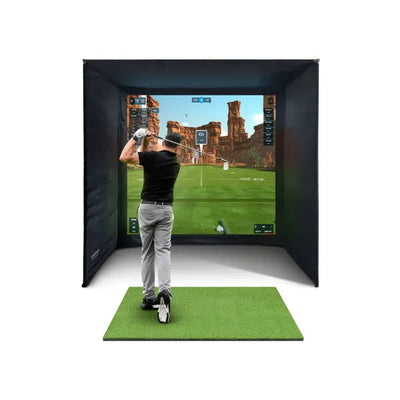
Two names have started appearing in my WhatsApp messages that barely registered a year ago: Foresight Falcon and GCHawk. Both are launch monitors that mount to the ceiling rather than sitting on the floor, and both tend to be discovered by golfers deep into planning a dedicated sim room who suddenly wonder why anyone tolerates a box on the ground at all. It’s a fair question with a genuinely interesting answer. This guide explains what ceiling-mounted launch monitors are, why they exist, which rooms they actually suit in the UK, and when a floor unit remains the smarter buy — which, for most home builds, it honestly does.

What the Falcon and GCHawk actually are
Both units come from Foresight Sports, the company behind the GC3 and GCQuad camera launch monitors that dominate tour trucks and custom fitting studios. The GCHawk is their established ceiling-mounted unit; the Falcon is the newer, more compact take on the same idea. Rather than a portable box placed beside or in front of the ball, these are camera systems fixed overhead, looking straight down at the hitting area. The cameras capture the club and ball at impact from above, and the unit stays bolted in place permanently — nothing on the floor, nothing to trip over, nothing to nudge out of alignment. Full specifications for both live on foresightsports.com, and I’d always check the current spec sheets there rather than trusting third-hand forum numbers.
Because they’re overhead camera systems reading the hitting zone from above, they share the practical virtues of Foresight’s floor cameras — direct measurement of what club and ball actually do at impact — while removing the unit from the player’s space entirely. That one change turns out to have surprisingly large consequences, good and bad.
Why ceiling mounting is genuinely brilliant
Nothing on the floor
In any busy sim space — a family room, a coaching studio, a golf club’s winter setup — the launch monitor on the floor is the most vulnerable object in the building. It gets kicked, knocked, tripped over and occasionally hit by a golf ball. Overhead, it’s untouchable. When I installed a floor camera unit for a customer with two football-mad sons, his first question was how to protect it; the ceiling-unit owner never asks that question.
Left- and right-handed players without touching anything
An overhead unit watches the whole hitting zone, so left- and right-handed golfers swap in and out with zero repositioning. For coaching environments, families with mixed-handed players, or golf clubs where anyone might walk in, this is the killer feature. (To be fair to floor units, this isn’t exclusive to the ceiling: the Uneekor Eye Mini and Garmin R50 also handle both without being moved, which is worth knowing before you spend ceiling-unit money for this reason alone.)
Alignment that never drifts
A portable unit gets placed by a human every session, and humans are approximate. A ceiling unit is calibrated once to a fixed hitting position and stays put. Every shot, every session, identical geometry. For coaches comparing data across weeks, that consistency has real value.
The honest trade-offs
Here’s the part the glossy install photos skip. First, a ceiling unit is a construction project, not a purchase. It needs a structurally sound ceiling at an appropriate height, professional mounting and calibration, and a room it will live in for years. Move house and it doesn’t just come with you in a bag — it’s a decommissioning job.
Second, the fixed hitting position cuts both ways. The unit watches one calibrated zone, so your mat and stance live where the calibration says they live. A portable unit can follow you to the range, to a mate’s garage, or outdoors into a net on a summer evening; a ceiling unit can’t follow you anywhere.
Third, cost and commitment. These are commercial-grade installations, typically specified and quoted per project rather than dropped in a basket, and by the time mounting and installation are done you are firmly in the upper reaches of home simulator spending. For a golf club, a coaching business or a genuinely permanent dedicated room, that can be exactly right. For a garage that might become a garage again, it usually isn’t — and I say that as someone who’d happily sell you the bigger invoice.
The floor-standing alternatives we stock
Most people who message me about the Falcon or GCHawk end up happier with a floor unit from the same technology family. Here’s how the three relevant options compare.
| Unit | Price | Type & placement | Portability | Best for |
|---|---|---|---|---|
| Foresight GCQuad | £16,788 | Quadrascopic camera, sits beside the ball | Fully portable | Fitting studios, coaches, no-compromise home rooms |
| Foresight GC3S | £3,990 | Camera, sits ~60cm in front of the ball | Fully portable | Serious home users wanting Foresight cameras at a sane price |
| Uneekor Eye Mini | £4,574.99 | Camera, portable floor unit, reads both LH & RH without moving | Fully portable | Mixed-handed households wanting ceiling-unit convenience on the floor |
The GCQuad is the closest floor-standing relative of the ceiling units: the same fitting-studio pedigree, measuring club and ball with the four-camera array that made Foresight’s name, but in a box you can carry to the range. The GC3S delivers the Foresight camera experience at less than a quarter of the GCQuad’s price and is the unit I recommend most often to golfers who arrive asking about ceiling mounts — because it sits about 60cm in front of the ball, it stays out of the swing and out of the walking line, which solves most of the problem people were trying to solve with the ceiling. And the Uneekor Eye Mini is the quiet overachiever here: a portable floor unit that reads left- and right-handers without repositioning, which removes the single biggest everyday argument for going overhead. There’s a full Eye Mini simulator package from £7,299 if you’re building the whole room around it.
So who should actually buy a ceiling unit?
After talking this through with a lot of customers, the genuine ceiling-unit cases boil down to three. A golf club or commercial venue where the room is permanent, the users are unpredictable and kit on the floor is a liability. A coaching studio where fixed calibration and a clean floor earn their keep every working day. And the no-compromise permanent home room — purpose-built space, ceiling height to spare, no intention of ever moving the setup, and a budget where the installation premium doesn’t change any other decision. A customer in Surrey who fitted out a dedicated outbuilding ticked all three-ish boxes and went ceiling-mounted with zero regrets; the dozens of garage and spare-room builds I’ve helped spec since have all been better served by a GC3S or Eye Mini and the leftover thousands spent on the enclosure, projector and screen that actually shape the daily experience.
One more practical point before the FAQs: whichever direction you go, the launch monitor is only one line of the build. Ceiling or floor, you’ll still need the enclosure, impact screen, projector and mat around it, and in a dedicated room those choices shape the daily experience at least as much as the sensor does. Budget the room as a whole, not the launch monitor plus loose change — it’s the single most common planning mistake I see in ceiling-unit conversations.
Frequently asked questions
Do the Foresight Falcon and GCHawk work for left-handed golfers?
Yes — overhead mounting watches the whole hitting zone, so left- and right-handers play without moving anything. Note that the Uneekor Eye Mini and Garmin R50 offer the same both-handed convenience from the floor, so don’t buy a ceiling unit for this reason alone.
What ceiling height do ceiling-mounted launch monitors need?
They’re designed for proper dedicated sim rooms rather than standard 2.4m domestic ceilings — check the current mounting specifications on foresightsports.com for the model you’re considering, and get the room measured before committing to anything. Height is the least fixable property of a room.
How much does a Foresight Falcon or GCHawk cost in the UK?
These are typically specified and quoted as installations rather than sold off the shelf, and pricing depends on the project. As a reference point for the technology family, the portable GCQuad is £16,788 — ceiling installs are a serious-budget conversation, which is exactly why we walk through the room and use case first.
Is a floor unit less accurate than a ceiling unit?
Placement doesn’t make cameras worse. The GCQuad and GC3S are trusted for club fitting in portable form; the honest difference is convenience and permanence, not the quality of the numbers for home use.
My straight recommendation: if you run a venue or you’re building a genuinely permanent room with the budget to match, the ceiling units are superb and worth a proper conversation. For everyone else, the GC3S or Eye Mini gets you the measurement quality that matters, keeps your options open, and leaves real money for the rest of the build — browse the wider launch monitor collection to see where they sit among the alternatives.
Not sure which option fits your space or budget? Message Tom on WhatsApp for a free consultation — no obligation, real answers from someone who installs this kit weekly.

Free Home Golf Simulator Design Consultation
Not sure on space, screen or launch monitor? Chat directly with Tom, OpenGolfer’s founder — he has designed hundreds of home setups and will tell you exactly what fits your room and budget.
- Send your room size (or a photo) — get a tailored layout and spec for your space, ceiling height included
- Personal replies from a real golfer, not a call centre
- Honest advice on what to buy — and what not to
Usually replies within the hour, 8am–8pm · prefer to talk? 02033 768500


Leave a comment