
Browse the docs
Enclosures & impact screens
What wall padding does a golf simulator room need?
 Tom Hayward, founder of OpenGolfer · Last reviewed · 5 min read
The short answer
Foam on the walls and ceiling the enclosure leaves exposed: the side walls beside the mat first, then the wall behind you and the ceiling line in a low room. Bevelled foam tiles suit most rooms; leatherette and upholstered panels are a finish upgrade on request. Padding never replaces the screen, the bay's panels or side netting.
What padding is for, and what it is not
Wall padding is foam fixed to the walls and ceiling that the enclosure leaves exposed. It does three jobs. It takes the shanks, toe hits and ricochets that leave the bay sideways, so the ball marks foam rather than plaster. It protects the people standing beside the golfer, because a ball coming off foam drops rather than rebounding. And it takes a little of the crack out of each strike, which the noise page covers properly. If a term is new, the glossary explains it.
What padding is not is a substitute for the enclosure. Foam cannot show a picture, is not made to stop a full-speed drive, and does nothing about a skied shot heading for the ceiling. GolfBays says the same of its own tiles: they shield walls and absorb noise. The impact screen takes the full shots, the velour side and ceiling panels of the bay catch mishits inside it, and padding deals with what gets past both. Our SimSpace room packages include the enclosure with its velour side and ceiling panels. Side netting is an add-on for every bay and package except SIM 0, which comes with its own. Padding sits on top of all that, never instead of it. How do I stop balls escaping? sets out the full set of layers.
Where it goes
- The side walls beside the mat, outside the bay. This is where most strikes land: a shank or a heavy toe hit goes out at an angle and meets the wall beside the frame or beside the golfer.
- The wall behind the golfer. Ricochets off the frame and the odd club head on the backswing reach it in a short room. It is the second job, not the first.
- The ceiling line above the tee, in a 2.7m room. The club at the top of the swing is the usual culprit, and a skied shot that clears the back of the bay.
- The base bar of the frame, where topped shots hit. That is a separate product, the SimSpace bumper pack, which fixes to the bar with velcro.
Anything under the mat is a different product again. The GolfBays turf underlay is 20mm interlocking EVA foam for the floor, for the room below and for the knees, not for the walls. Do I need a base under my mat? covers it.
The ladder, from cheapest to the fitted-studio look
1. Interlocking foam gym tiles
The budget route: EVA jigsaw tiles sold for home gyms, fixed to the wall or ceiling. They take a ball and quieten the room, but the jigsaw edges show, the colours are usually grey or chequered, and the foam is softer than purpose-made wall tile. We do not sell them for walls; our one EVA jigsaw product is the floor underlay above. Cost band: low.
2. Bevelled premium foam tiles
The tile we put in our room packages when a wall needs covering. GolfBays' Premium Wall Foam Tiles are high-density foam, 50 × 50cm, ten to a pack covering 2.5 square metres; the 1.0 × 0.5m large-format tile covers 5 square metres a pack and goes up faster on a long wall. The bevelled edge is the point: each tile's edge is cut back at an angle so the joins read as a grid of shadow lines rather than a patchwork, and the matt black lifts the contrast of the projected picture around the bay. GolfBays says the foam absorbs full-speed ball impacts without deteriorating. Neither GolfBays nor our product page publishes a fixing method; on our proposals we specify spray adhesive or velcro strips, fitted by your builder. Brush off dust and wipe marks with a damp cloth. Cost band: low to medium.
3. Leatherette-faced padded panels
A step up in finish rather than protection: the same sort of foam core, 50 × 50 × 5cm, with a leatherette face in black or grey, so the room reads as upholstered rather than padded. The face wipes clean, which matters on a side wall that takes a dirty ball. Foam-backed, so the fixing is the same as the tiles. These are not in the store yet; we offer them on request when a room is being specified, and the fit check at the foot of this page is the place to ask. Cost band: medium.
4. Upholstered fabric-faced panels
The fitted-studio finish: fabric upholstered over foam on a wooden backing, hand made to order in grey, red, blue or black as standard, or any colour you send. Being wooden-backed they are screwed or glued by your builder, so they are a build-stage item, and they take four to six weeks to make, which suits a garden room or lodge still being framed. Fabric cannot be wiped, so keep them off the wall that takes the dirtiest strikes and let the foam tiles do that job. On request only, as above. Cost band: high.
How much you need: a SIM 2 in a 3.5m-wide room
A SIM 2 bay is 3.0m wide inside with a 3.1m outer frame, so a 3.5m room leaves about 0.2m of wall showing either side of the frame, with the full side wall exposed from the back of the bay to the golfer and beyond. Count it like this:
- Side walls. Pad from the back of the frame to a metre behind the golfer, 2.5m along, and up to 2.5m high: 6.25 square metres a side, 12.5 in all. That is 50 of the 50 × 50cm tiles (five packs) or 25 large-format tiles (three packs, with five spare).
- Rear wall. The full 3.5m width to 2.5m high is 8.75 square metres: 35 small tiles (four packs) or 18 large-format (two packs).
- Ceiling line. In a 2.7m room, one row of large-format tiles above the tee, 3.5m across, is seven tiles, which the spare from the side walls nearly covers.
So the whole room is about 21 square metres: nine packs of the small tile or five packs of the large. Most rooms do the side walls first and add the rear wall later if it starts collecting marks. Measure your own walls rather than copying mine; a radiator, a window or a door changes the count.
Plasterboard, block and new builds
On painted plasterboard, spray adhesive bonds well but takes the paint with it when the tiles come down, so if you might redecorate or you rent, use velcro strips and accept a slightly less flat finish. On block or brick in a garage, dust and damp defeat adhesive: brush the wall, let it dry out, and if the wall is cold and sweats in winter, batten a sheet of ply or OSB first and fix to that. Damp and condensation explains why garage walls do that.
In a garden room or lodge, agree the padded zones with the builder before first fix, so no socket, switch or light sits where a tile will go, then fit the padding after decoration and before the second-fix faceplates go on. Upholstered panels on a wooden backing want fixings into the studs, which is easier to plan while the walls are open. Garden room golf simulator has the rest of the build order.
In summary
The enclosure does the containing; padding protects the walls the enclosure leaves exposed and quietens the room a little. Bevelled foam tiles are the right answer for most rooms, the leatherette and upholstered panels are a finish upgrade we price on request, and nothing on this page replaces the screen, the side and ceiling panels or the side netting.
Wall padding options, side by side
| Option | Faces | Fixing | Look | Cost band | Where we'd use it |
|---|---|---|---|---|---|
| Interlocking EVA gym tiles | Plain EVA foam, jigsaw edge | Adhesive or velcro; jigsaw edges show | Grey or chequered, home-gym | Low | A garage you may move out of; not something we sell for walls |
| Bevelled premium foam, 50 × 50cm | High-density foam, bevelled edge | Maker does not publish one; we specify spray adhesive or velcro strips | Matt black grid of shadow lines | Low to medium: £140 per 2.5m² pack | Side walls and ceiling line in most rooms; tight or fiddly areas |
| Bevelled premium foam, 1.0 × 0.5m | High-density foam, bevelled edge | As above | Matt black, fewer joins | Low to medium: £240 per 5m² pack | Long rear and side walls, faster to fit |
| Leatherette-faced padded panel, 50 × 50 × 5cm | Leatherette over a foam core, black or grey | Foam-backed: spray adhesive or velcro strips | Upholstered studio, wipe-clean | Medium; on request | Side walls where the finish matters and balls arrive dirty |
| Upholstered fabric panel, 50 × 50 × 5cm | Fabric over foam on a wooden backing | Screwed or glued by the builder; four to six weeks to make | Fitted studio, your colour | High; on request | Rear wall and feature walls in a purpose-built room |
Tile counts for your room: divide the wall area by 0.25m² for the small tile or 0.5m² for the large, then round up to whole packs of ten. Prices are live.
Best practice
- Enclosure first, padding secondBuy the bay with its velour side and ceiling panels, add side netting, then pad what is still exposed. Padding on its own leaves the ball loose in the room.
- Pad the side walls before the rear wallShanks and toe hits go out sideways. The wall behind you collects ricochets and the odd club head, so do it second if marks appear.
- Count tiles from the wall areaArea divided by 0.25m² for the 50 × 50cm tile, by 0.5m² for the large format, rounded up to packs of ten. Measure round radiators, doors and windows.
- Agree padded zones before first fixIn a garden room or lodge, keep sockets, switches and lights out of the padded areas, and fix wooden-backed panels into studs while the walls are open.
- Choose the face for the wall's jobFoam or leatherette where dirty balls arrive, because both wipe clean. Fabric upholstery belongs on walls that take ricochets, not strikes.
Gotchas to avoid
- Padding instead of an enclosureFoam cannot show a picture or stop a full drive, and it does nothing about a skied shot. It protects walls the bay leaves exposed; it does not contain the ball.
- Spray adhesive on painted plasterboardIt holds, and it takes the paint with it when the tiles come down. If you rent or might redecorate, use velcro strips.
- Adhesive on a damp garage wallDust and winter condensation lift the tiles. Brush and dry the wall, or batten ply over it and fix to that.
- Fabric where the dirty balls landUpholstered panels cannot be wiped. A side wall that takes shanks will show every mark; use foam or leatherette there.
- Confusing underlay with wall tileThe GolfBays turf underlay is 20mm floor foam for noise and the room below. It is a different product from the wall tiles.
Our recommendation
Bevelled foam tiles on the side walls, with the enclosure and side netting doing the containing. Upgrade the finish to leatherette or upholstery only once the room is otherwise right.
- If your room is 3.5m wide with a SIM 2
- Three packs of the large-format tile for the side walls, more later for the rear wall if it marks.
- If the ceiling is 2.7m
- A row of large-format tiles along the ceiling line above the tee, and keep the light fitting out of that row.
- If you want the fitted-studio look
- Leatherette on the strike walls, upholstered panels behind you; ask through the fit check and we price them for the room.
- If the room is still being built
- Agree the padded zones with the builder before first fix and plan stud fixings for any wooden-backed panels.
For your room we'd pick…
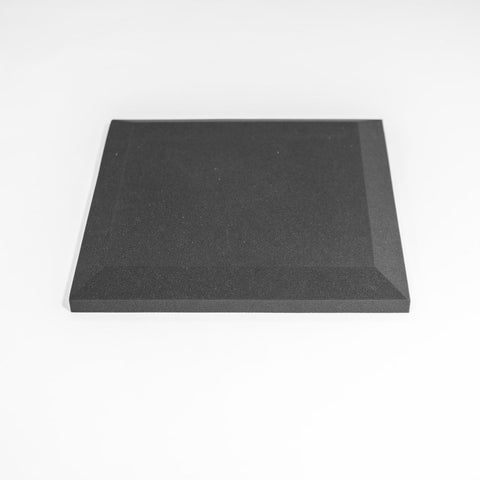 For exposed wallsPremium Wall Foam Tiles Bevelled (Pack of 10) BlackHigh-density bevelled foam, 50 × 50cm, ten tiles covering 2.5m²; absorbs full-speed strikes and the noise of them.£140
 Either side of the baySimSpace Side Netting 1.5 x 2.5 MtrA 1.5 × 2.5m net panel for SimSpace enclosures; the add-on that catches what leaves the bay sideways. SIM 0 has its own.£99.99
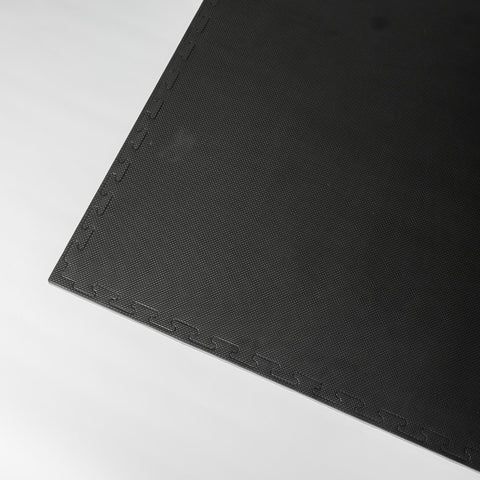 For the floor, not the wallGolf Simulator Turf UnderlayFive interlocking 1 × 1m EVA tiles, 20mm thick, for noise and the room below. Often confused with wall tile.£85
 The bay in the worked exampleSimSpace SIM 2 Golf Enclosure 3 × 2.5 × 1.5mSimSpace SIM 2, 3 × 2.5 × 1.5m, with velour side and ceiling panels and the 4K Platinum impact screen.from£999.99
Questions people ask
Can I pad the walls instead of buying an enclosure?
No. Foam is not a projection surface, is not made to stop a full-speed ball and does nothing about a skied shot. You need the impact screen and the side and ceiling panels to contain the ball; padding protects the walls the bay leaves exposed.
Does the bay come with padding?
The SimSpace bay comes with velour side and ceiling panels and padding on the frame. Wall tiles for the room, side netting and the base bar bumper pack are add-ons, and SIM 0 comes with its own side netting.
Are the GolfBays tiles interlocking?
No. They are bevelled: each edge is cut back at an angle so the tiles butt up and the joins read as shadow lines. Interlocking jigsaw edges are the home-gym tile, and on our shelves only the floor underlay is made that way.
How do I fix foam tiles to the wall?
GolfBays does not publish a method. On our proposals we specify spray adhesive or velcro strips, fitted by your builder. Velcro comes off cleanly; adhesive holds better and marks paint. Damp or dusty block needs cleaning or a sheet of ply first.
What are the padded or upholstered options?
Two steps above the foam tile: a leatherette-faced panel with a foam core that wipes clean, and a fabric-upholstered panel on a wooden backing, made to order in your colour in four to six weeks. Both are offered on request when we specify a room rather than from the store.
Does padding make the simulator quiet?
A little. It takes some of the echo out of the room and softens the crack of a strike into the wall. The screen, a foam backing layer behind it and the floor underlay do more for the room below, which the noise page covers.
Still unsure? Ask our experts about this page on live chat or WhatsApp. Send your room size and he’ll tell you straight.
Ask an expertGo deeper

Planning a home simulator? Get the Sim Buyers email.
Twice a week from our sim experts: what's new in our buyer guides and docs, launch monitor and software news, and early offers.
Tuesdays and Fridays. Unsubscribe any time.